



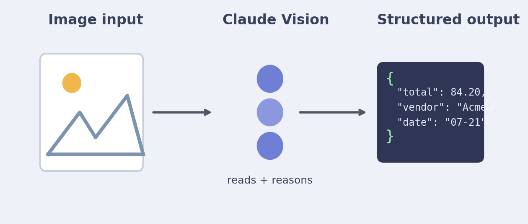


The evolution of multimodal artificial intelligence has opened up incredible possibilities for web and mobile software development. Anthropic’s Claude model stands out for its exceptional ability to process and reason over visual inputs alongside text prompts. Instead of relying on legacy OCR libraries that struggle with complex layouts or handwriting, developers can now feed raw images directly into Claude’s API to extract structured data, analyze user interface designs, or inspect visual documents. This opens up entirely new categories of features that were previously too tedious or brittle to build programmatically.
Implementing Claude’s visual capabilities into your codebase is surprisingly straightforward, but it requires careful payload preparation. The API accepts visual inputs either as hosted image URLs or as Base64-encoded strings within the content payload. To get consistent, machine-readable results back from the visual model, developers should combine system prompts with strict output constraints, such as requesting JSON objects with specific keys. For instance, when asking Claude to inspect a snapshot of an invoice or a UI wireframe, prompting it to format its findings as structured JSON allows your backend to directly parse, store, or process the output without complex text cleaning.
When deploying Claude’s vision capabilities in production, engineers must carefully manage trade-offs between image resolution, token usage, and response latency. High-resolution photos provide greater detail for intricate charts or small typography, but they consume more tokens and take longer to transmit over the network. Optimizing image sizes on the client side before sending them to the API can dramatically improve throughput while keeping API costs under control. By combining smart image preprocessing, crisp system prompts, and robust fallback logic, developers can build fast, visually aware applications that deliver immense value to end users.