





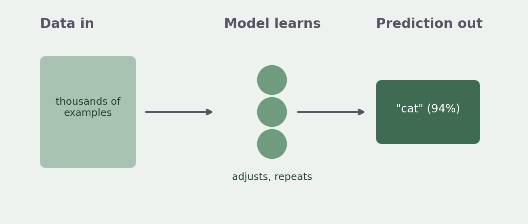
Moving from traditional software engineering into machine learning requires a fundamental shift in mindset. In classical programming, we take explicit rules written in code, feed in data, and calculate an answer. In machine learning, we flip that equation completely on its head by feeding the system both raw data and known answers, allowing the algorithm to infer the underlying rules automatically. Once you wrap your head around this concept, you stop viewing software as a fixed sequence of conditional statements and start seeing it as a dynamic system that continuously learns and adapts from patterns.
When you start building machine learning projects, you quickly realize that selecting hyper-complex neural network architectures is only a small fraction of the job. Most of an ML engineer’s time is spent on data pipelines—cleaning messy datasets, addressing missing values, handling class imbalances, and extracting meaningful features. A simple, well-tuned linear model trained on high-quality, normalized data will almost always outperform a sophisticated deep neural network fed with noisy garbage data. Building robust, reproducible ETL pipelines is where the real engineering discipline shines.
Once a model achieves satisfactory evaluation metrics on paper, the true challenge begins: serving it in production reliably. Deploying machine learning models introduces unique operational demands like managing inference latency, scaling GPU infrastructure, and monitoring model drift over time. Because real-world user data shifts continuously, a model that performs brilliantly today might degrade in accuracy six months from now. Implementing solid MLOps practices, automated retraining triggers, and telemetry tools ensures that your machine learning backend remains accurate, responsive, and resilient under production loads.